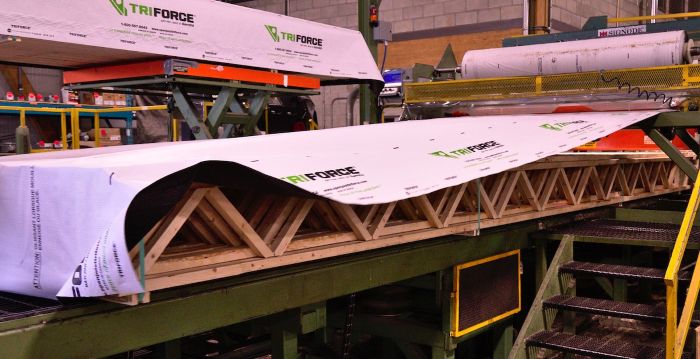
At Barrette Structural, we place great importance on supporting our customers, both during the installation of TRIFORCE® joists and after they have been put in place. Our team is available at all times to answer your questions and provide you with repair details tailored to the realities of your construction sites.
Certain installation issues arise more frequently when building an open web joist system. This includes installing joists upside down, questions related to notching upper or lower chords or webs, as well as creating cantilevers or other repair details.
Technical Support That Goes Beyond Delivery
Our commitment does not end with the manufacturing and delivery of TRIFORCE® open web joists. We provide ongoing technical support to contractors, engineers, owner-builders, and construction professionals to ensure compliant, safe, and efficient installation.
Our team of experts is available to:
- analyze specific on-site situations
- review and validate structural modifications
- provide approved repair details
- interpret plans and engineering reports
- recommend solutions that comply with the Building Code
Every construction project comes with its own realities. That’s why we take a proactive, responsive, and personalized approach to technical support.
Why It Matters
Engineered wood floor systems like TRIFORCE® are designed to meet precise structural performance standards.
Unlike traditional dimensional lumber, they rely on engineered load distribution models and specific installation requirements.
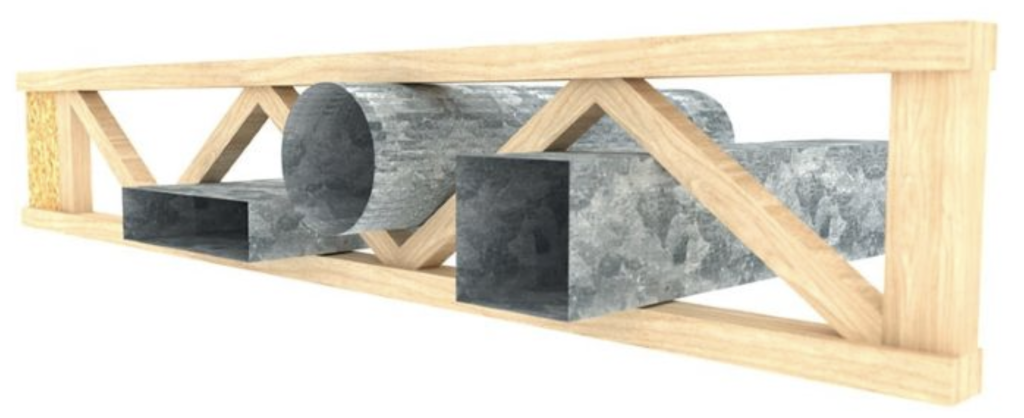
Floor systems also interact with plumbing, HVAC, and electrical components — which means trade coordination matters. Early communication between designers, builders, and trades prevents structural conflicts before they become costly on-site problems.
Common Installation Challenges – And How to Handle Them
1. Installed a TRIFORCE® joist upside down?
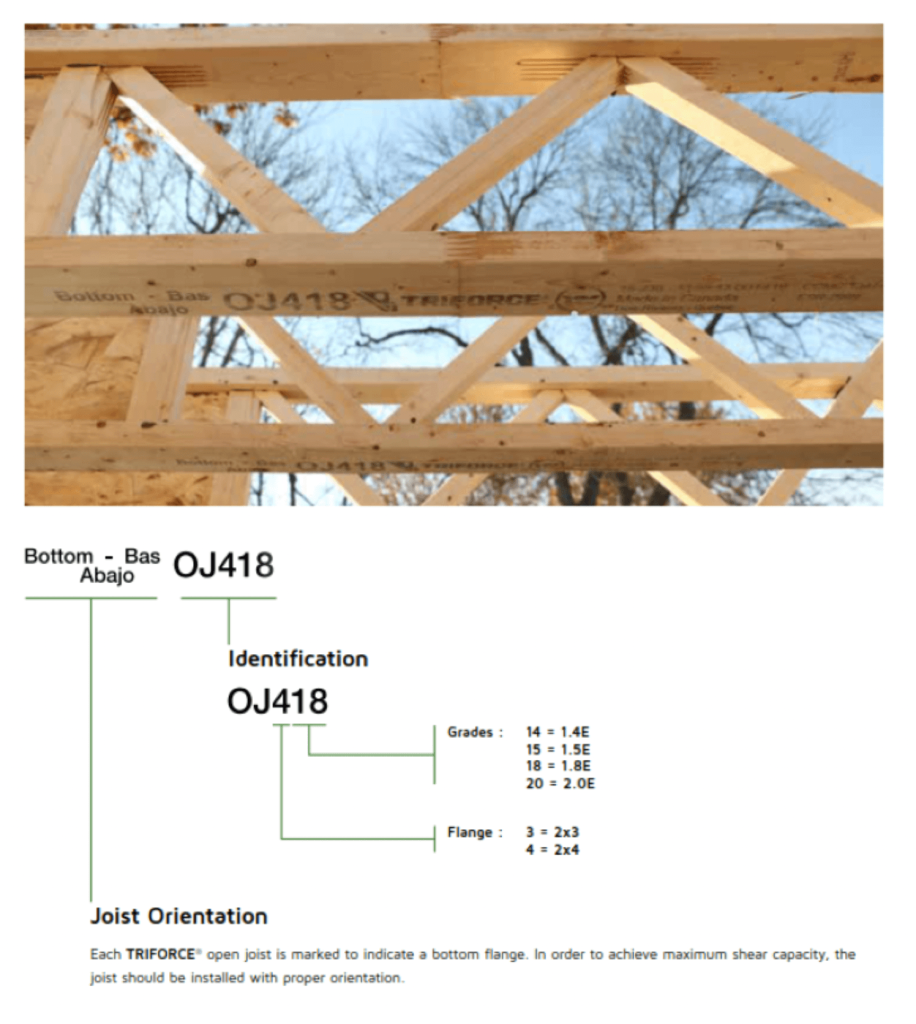
Because our joists are designed without camber, the risk of damage is minimal. However, it’s important to contact us so we can evaluate the situation and provide you with the appropriate guidance. In most cases, we require joist analysis reports in order to perform the necessary calculations and subsequently approve the joists. TRIFORCE® joists are always clearly identified, check the label before installation to avoid mix-up altogether:
2. Notching floor joists: Know the Rules Before You Cut
Notching the upper or lower chord is strictly prohibited, as it may compromise the structural integrity of the joist.
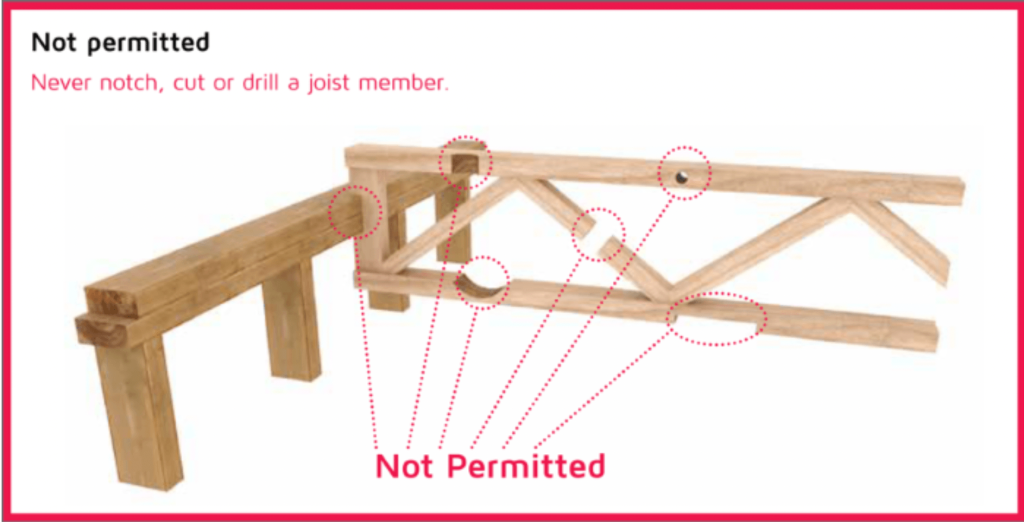
As for the webs, they are structural components that transfer loads between the top and bottom chords. Cutting, notching, or removing a web can significantly reduce the joist’s capacity and may lead to failure. Any modification without an engineered repair detail voids the manufacturer’s warranty.
Bottom line: top chord, bottom chord, or web → don’t cut it unless you have written approval.
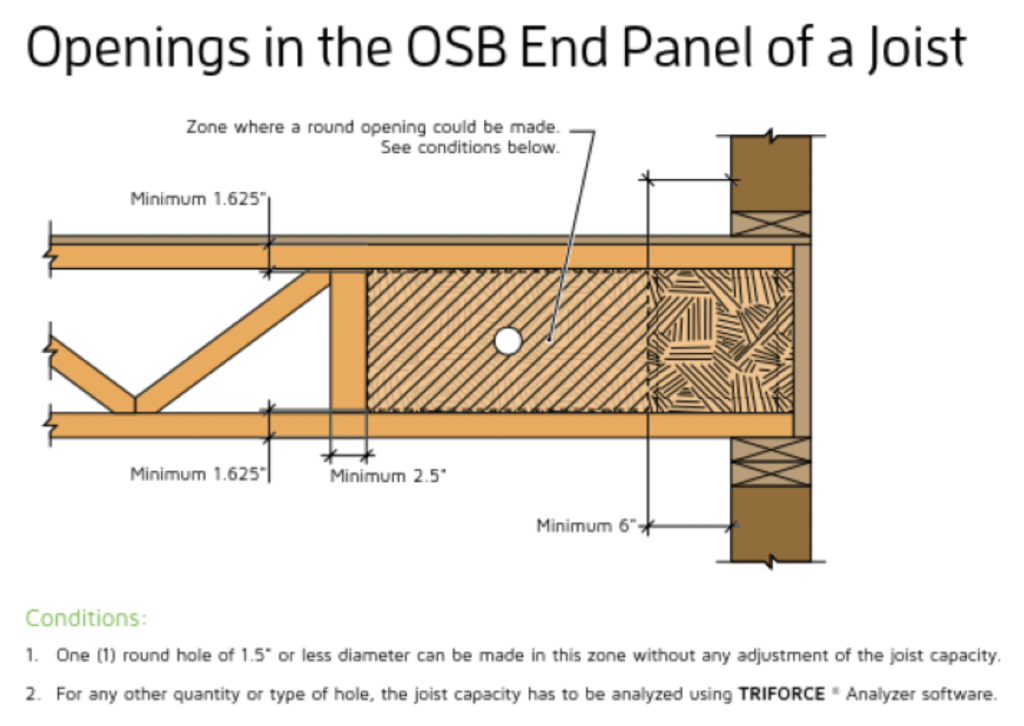
The OSB part? It can be opened, only at one very specific location and only if the instructions shown in the illustration below are followed exactly:
Toilet and bathtub drainpipes are the most common reason for joist notching. The simplest fix: pipes between joists rather than though them. Good communication between the designer, builder, and plumber from the start goes a long way toward avoiding costly repairs down the road.
3. Cantilevers: Follow the 1/3 Rule
When designing and calculating a cantilever with TRIFORCE® open web joists, it’s important to follow some key guidelines:
The 1/3 Rule: The span of the joist inside the building should generally be at least twice the length of the overhang.
For example, if you have a 2′-0″ cantilever, the joist should extend at least 4′-0″ into the building.
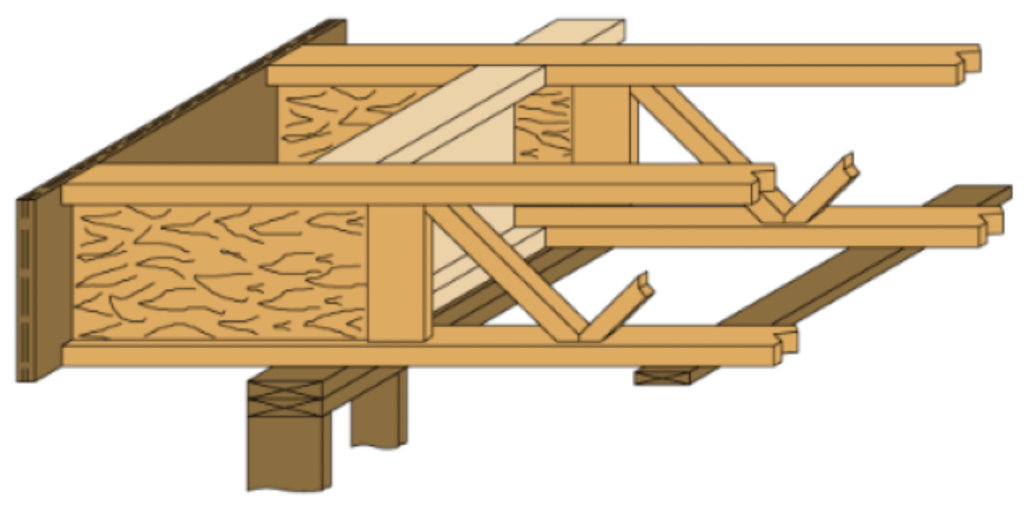
Various cantilever situations can occur. We have detailed examples to cover them. And whenever dimensional lumber is used for framing an exterior deck, the use of treated lumber is strongly recommended.
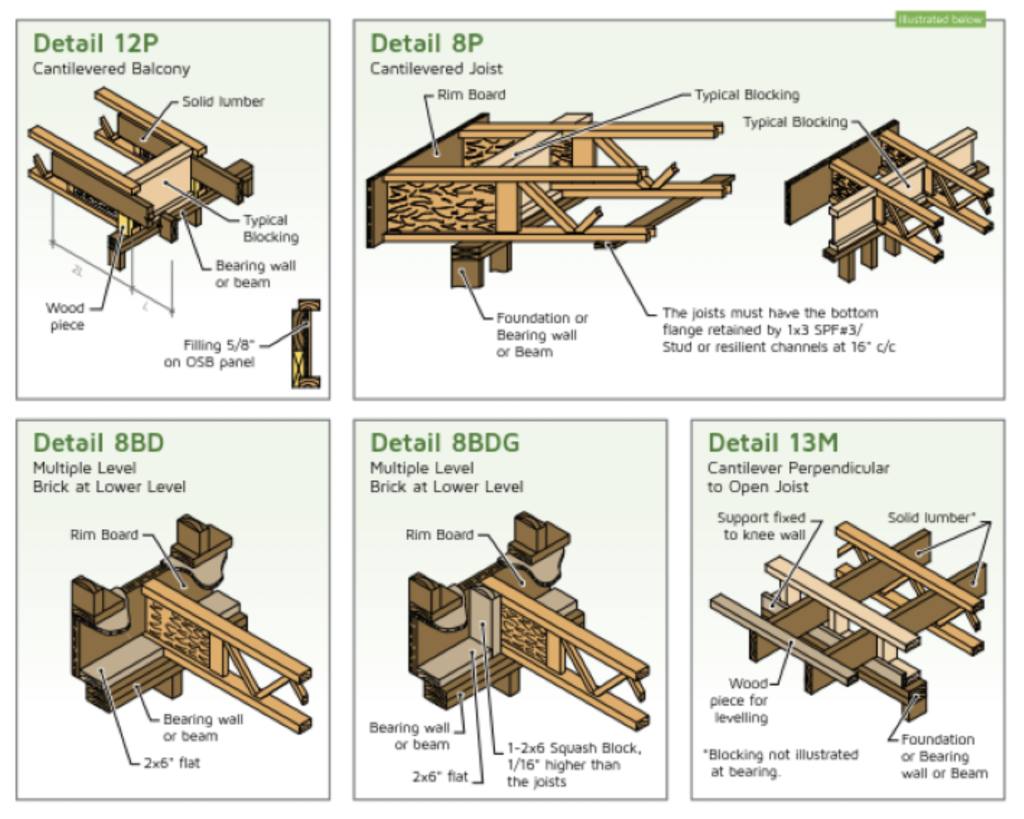
4. Repair details: The Answers Are Already There
Many detailed repair instructions are available on our website to assist you in making the necessary corrections in the event of damage, errors, or improper handling. These resources help you to continue construction safely, save time, increase efficiency, and ensure compliance and long-term performance.
👉 https://www.openjoisttriforce.com/common-repairs/
For detailed guidance on cantilever framing, repair details or any other information about our open web joists in a TRIFORCE® floor system, refer to our Spec guide or contact us — We are happy to assist.
FAQ – TRIFORCE® Joist Support and Installation
Does Barrette Structural offer technical support after delivery?
Yes. Our technical team remains available after installation to answer your questions, analyze specific on-site situations, and provide approved repair details when needed.
Can a TRIFORCE® joist be modified on site?
No structural modification — notching of chords or webs — should be made without written approval. Any unauthorized modification can compromise structural capacity and void the manufacturer’s warranty.
What should I do if a TRIFORCE® joist was installed upside down?
Contact our team immediately. In most cases, a structural analysis will be conducted to determine whether the joist can be approved as-is or whether a correction is required.
Where can I find repair details for TRIFORCE® open web joists?
Common repair instructions are available on our website at openjoisttriforce.com/common-repairs. For specific situations, our team can provide details tailored to your project.
Who can contact TRIFORCE® technical support?
General contractors, framers, engineers, owner-builders, lumber yard owners, and distributors can all reach out directly to our team.