Key takeaways:
- Modern homes with high-load features (granite islands, fireplaces, aquariums) require proper structural analysis to prevent excessive deflection and cracking.
- Standard floors are designed for uniform loads; concentrated loads must be accounted for separately through reinforcement methods like doubling joists, reducing spacing, lateral bracing, or concrete overlays.
- TRIFORCE® open-web joists offer adaptability and can be adjusted to meet elevated load demands while maintaining installation simplicity and mechanical system integration.
- Proper load analysis prevents structural failure and ensures long-term floor system performance.
During renovation or new construction projects, many design ideas and finishes are incorporated to reflect current trends and create modern, functional, and durable living spaces. Oversized kitchen islands with quartz countertops, decorative fireplaces, freestanding bathtubs, built-in bookshelves, glass wine cellars, and high-end appliances have become common features in today’s homes.

However, beyond aesthetics, it is essential to consider the structural impact of these additions on floor systems. Many of these elements introduce significant loads that may exceed the original design assumptions. Although they may appear minor at first glance, these concentrated loads must be properly accounted for to ensure the long-term performance, stability, and safety of the floor structure.
Understanding residential floor design standards and structural implications
The TRIFORCE® approach
First of all, floor joists must be appropriately designed based on the actual loads of the project. A proper structural analysis will determine whether reinforcement is required to safely and effectively support these elements while meeting applicable building code requirements.
Fortunately, TRIFORCE® open web joists offer excellent adaptability. Several reinforcement methods can be implemented depending on the specific project requirements and load conditions.
After proper engineering calculations, TRIFORCE® joists can be efficiently adjusted to meet the demands of your design while maintaining the advantages of their open-web configuration, including reduced weight, ease of installation, and simplified integration of mechanical systems
This versatility makes it possible to achieve modern and ambitious architectural designs without compromising the structural performance of the floor system.
Loads and weight distribution across the structure
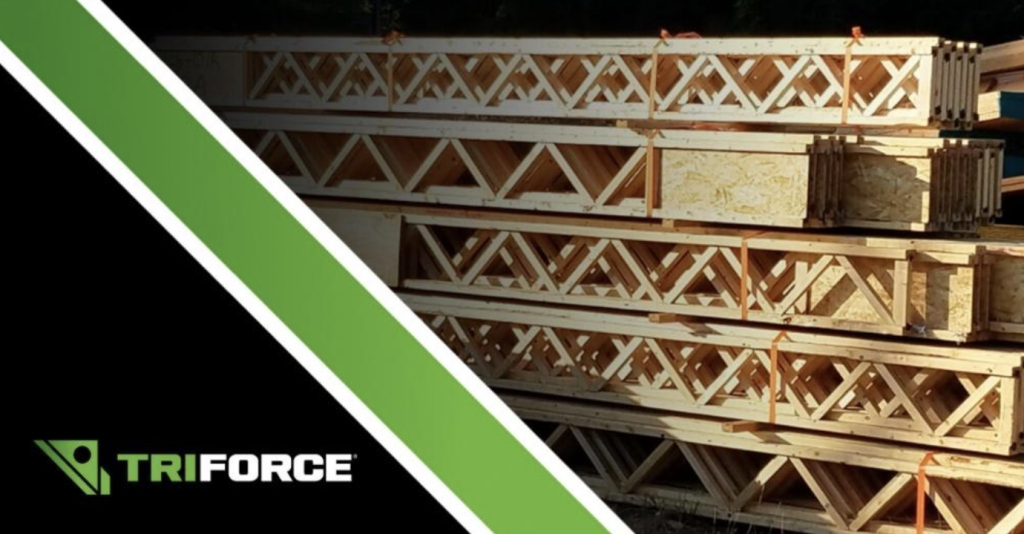
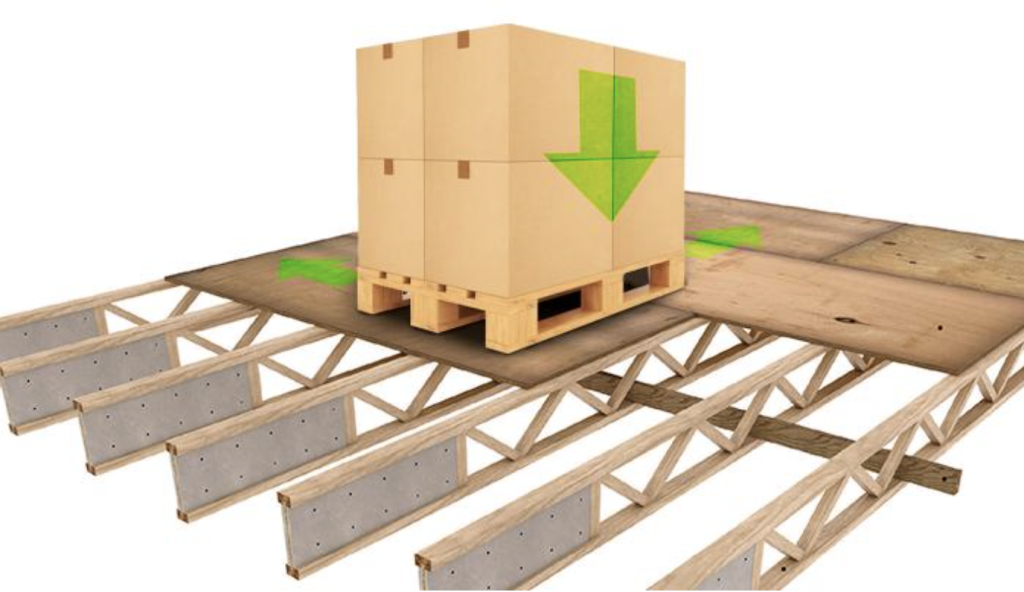
When designing a floor system, it is essential to have a clear understanding of how loads and weight are distributed across the structure. In many cases, floor framing is a key element in the load path, helping transfer forces from the roof down through the building and ultimately to the foundation. An excessive load can lead to increased vibrations, cracking in finish materials, or in extreme cases, structural failure.
In the residential sector, the main additions that can increase floor loads include:
- Installation of a fireplace featuring stone or brick walls
- Placement of exercise or weight-training equipment
- A fully loaded bookcase or library
- Kitchen islands made of quartz or granite
- Large aquariums filled with water (1,500 lbs and more)
These additional loads can negatively affect floor performance because a standard floor is designed for uniformly distributed loads and normal residential use. When concentrated loads are introduced, the joists may deflect more than what is permitted or considered acceptable.
A standard residential floor system is typically designed for the following loads:
- Live load: 40 lbs per square foot (psf)
- Dead load (permanent load): 15 lbs per square foot (psf)
Live load refers to anything that can move, change, or be removed within a building, such as people, furniture (sofas, tables), appliances, and temporary stored items.
Dead load refers to the permanent weight of the structure itself, including floor joists, walls, flooring, and finishes.
For example, for a kitchen island with a heavy finish, a dead load (or permanent load) of 18 lbs per square foot can be applied to the joists, which may require strengthening of the structure.
Technical solutions for reinforcing floor joists
Doubling the joists or reducing spacing
When large concentrated loads are added, solutions such as doubling the joists or reducing the spacing between them can be implemented. Doubling the joists allows the two members to work together, making the floor stronger and less flexible. And when the joists are spaced closer together, each one carries less load and the load is more evenly distributed.
Using lateral bracing or panel stiffening
Reinforcement can also be achieved with lateral bracing or with OSB panels screwed and glued to the joists. A lateral reinforcement helps a joist by making it stiffer and reducing its deflection, especially in the areas where it is under the greatest stress.
Installation of a concrete topping slab
If a concrete topping slab is planned for the entire floor, it will be possible to account for the required loads during the design phase.
This procedure is most commonly found in multi-family buildings, where it is used to improve sound insulation, increase fire resistance, allow for radiant floor systems, and reduce vibrations. The applied loads are as follows:
For 1 ½” of a lightweight concrete overlay = 18 lbs/sq ft (dead or permanent load)
TRIFORCE joist is also suitable for small commercial buildings
TRIFORCE® joists are not used only in residential construction; they can also be applied in certain commercial projects due to their characteristics, such as:
- high rigidity
- long span capabilities (the 16” deep joist can reach spans of up to 30’—span tables are available on our website)
- ease of mechanical routing through its open web
- high load-bearing capacity
- predictable performance since it is factory-controlled.
In these applications, floor loads may differ from residential use and are generally higher:
- 40 lbs/sq ft (live load)
- 15-35 lbs/sq ft or more(dead load)
In addition, an extra load is automatically considered on the joists for this type of building; this is the moving load associated with heavy filing cabinets.
In summary, whenever loads exceed standard residential usage conditions or are highly concentrated in a specific area, a structural analysis is required and reinforcement may be necessary.